Austria
 Belgium
 France
 Germany
 Italy
 Netherlands
 Poland
 Spain
 Sweden
 United Kingdom
 United States
Area code 021 is not a number that any Irish company can buy off the shelf. It identifies Cork at a regulatory level, so operators only release a 021 line when the subscriber has a recognised geographic link to Ireland’s second city, typically a CRO-registered office, a branch address or a serviced office inside the Cork numbering area. The rule sits inside ComReg’s national numbering plan and exists so that a 021 number on a website continues to mean what customers in Munster expect it to mean. For most established Cork operators the rule barely registers, but for companies expanding from Dublin, restructuring after an acquisition or opening a southern branch, it pays to know exactly which towns sit inside the 021 area and which sit just outside.
This article maps the 021 coverage in detail, explains why ComReg and Irish operators tie the prefix to a real address, and walks through the steps that confirm whether your business qualifies. From there, applying for a 021 number for your Cork business becomes a predictable exercise rather than a gamble on which carrier accepts which paperwork.
Which towns does the 021 area code cover?
The 021 area covers Cork city together with a wide arc of towns around Cork Harbour and the immediate county, reflecting how the city’s port, airport and manufacturing base grew outward through the twentieth century. The principal centres inside the area:
- Cork city centre — the commercial and legal core around Patrick Street and the South Mall, home to much of Munster’s professional-services and financial activity
- Ballincollig — Cork’s largest satellite town, a dense mix of retail parks, tech-sector offices and residential growth to the west of the city
- Blarney — north-west of the city, known for tourism but increasingly home to office and light-industrial parks
- Glanmire and Riverstown — north-east Cork’s commuter belt, with strong logistics activity along the N8 corridor
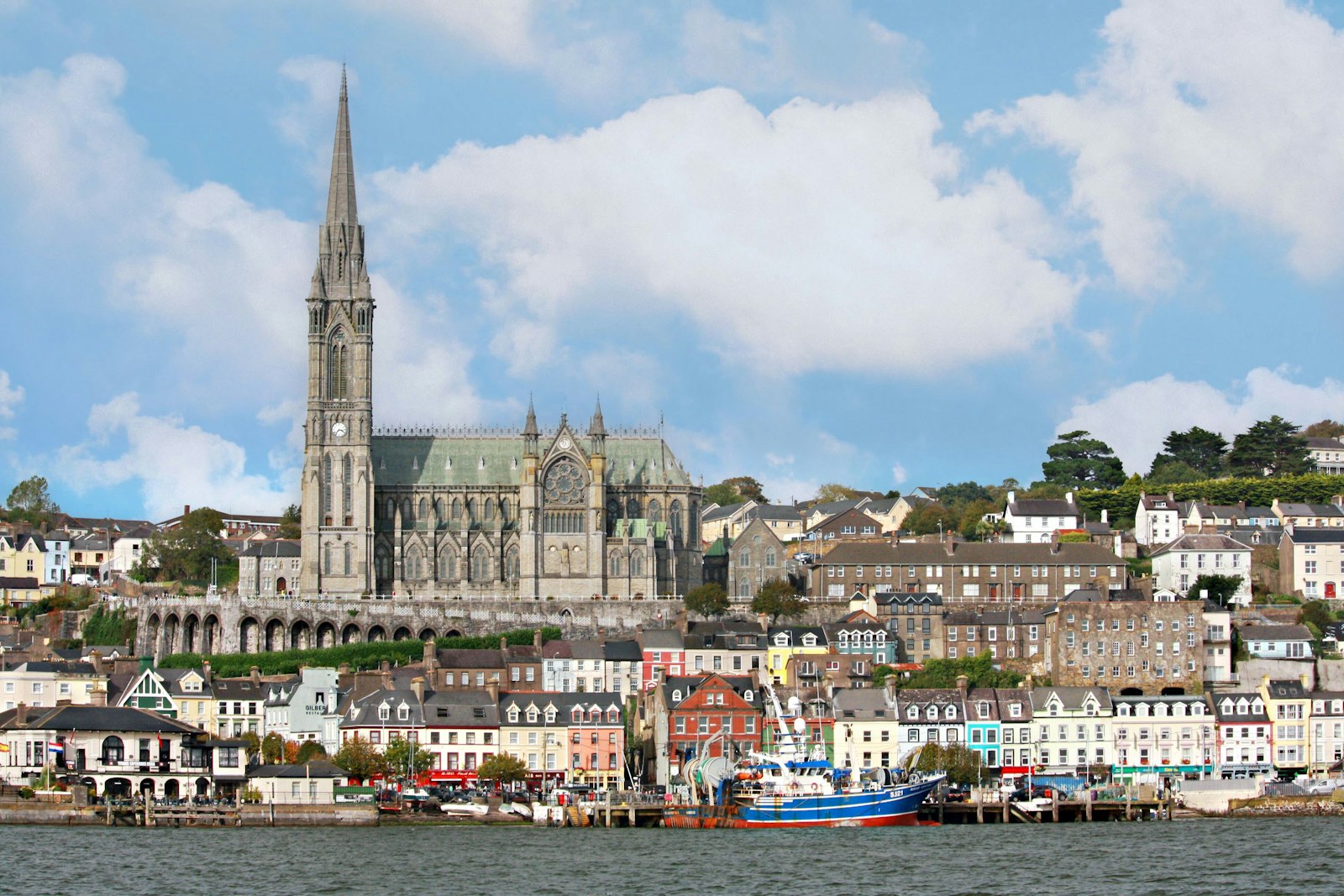
- Cobh — the harbour town on Great Island, a cruise-tourism hub with a growing marine-services sector
- Carrigaline and Crosshaven — south of the city on the Owenabue estuary, home to marine leisure, boatbuilding and a fast-growing residential and retail base
- Passage West and Monkstown — harbourside towns with marine engineering and logistics activity tied to Cork Port
- Ringaskiddy — the deep-water port and pharmaceutical-manufacturing estate at the mouth of Cork Harbour
- Midleton — east Cork’s market town, home to food and drinks manufacturing alongside a growing retail centre
- Kinsale — the harbour town south-west of the city, combining tourism, hospitality and a long-standing marine-services cluster
- Coachford — a smaller Lee valley town whose exchange sits inside the same 021 numbering area as the city
A business with a CRO-registered office, a branch address or a serviced office at any of these locations satisfies the geographic link and qualifies for a 021 number. CallFactory verifies the address against the CRO register at the point of application.
Why the geographic rule exists
Irish area codes were designed so that the leading digits of a phone number tell the caller, and the caller’s billing system, which part of the country the line sits in. A 021 says: this line belongs to Cork. A 01 says: Dublin. A 091 says: Galway. That signalling job only works while the prefix stays anchored to a real address rather than a marketing preference, so ComReg’s numbering plan ties each geographic block to a numbering area and expects operators to release numbers only where the subscriber has a meaningful link to it.
For your business the rule carries two consequences. The practical one comes first: without a Cork address on file, an operator will refuse the application or unwind it later when the address check fails. The strategic one matters longer, because the same scarcity that limits assignment is what keeps a 021 number valuable as a trust signal on a website, an invoice or a CRO filing. Customers across Munster read the prefix as proof of a local presence, and businesses that trade heavily with Cork Port, the pharmaceutical cluster in Ringaskiddy or the tourism trade in Kinsale benefit from a number that visibly matches where their customers already are.
What counts as a meaningful link is broader than a strict residency test. A CRO-registered office in the city centre, a branch listed at the CRO in Ballincollig and a serviced office in Blackpool all qualify equally. A residential PO box does not, while a rented desk with a real workplace behind it usually clears the bar once the address is registered. CallFactory checks the address before activation so the assignment stands up to a later audit.
Boundary cases around Cork
County Cork is the largest county in Ireland, large enough to hold several separate numbering areas rather than one single code for the whole county, so a number of well-known Cork towns sit on a different area code from the city. The cases that come up most often:
- Mallow — north, area code 022. The main market town of north Cork, well inside the county but on its own numbering area
- Bandon — south-west, area code 023. A substantial town on the Bandon river, close enough to Cork city to surprise businesses expecting 021
- Youghal — east, area code 024. The main town on Cork’s eastern seaboard, bordering County Waterford
- Fermoy — north-east, area code 025. A garrison town on the Blackwater, on the Dublin road out of Cork but on a separate MNA
- Macroom — west, area code 026. The gateway to west Cork and the Gaeltacht areas further along the N22
- Skibbereen — far south-west, area code 028. West Cork’s principal market town, well outside the 021 harbour area
These boundary cases matter for two reasons. First, they stop a business in Mallow or Bandon from submitting a 021 application that an operator will later have to refuse. Second, they map cleanly onto a multi-site structure, so a Mallow head office can keep its 022 line while a Cork city branch carries a separate 021 number, with both routed through the same CallFactory account so that callers and staff treat them as one phone system.
How the 021 area grew historically
Cork’s numbering history tracks the growth of its port and industrial base rather than the city’s administrative boundary alone. As Ireland’s second city, Cork received its own dedicated area code early, and the numbering area expanded through the twentieth century to absorb the harbour towns that grew alongside Cork Port, including Cobh, Ringaskiddy and Passage West, along with the commuter and industrial belt running out to Ballincollig and Glanmire.
Cork moved to seven-digit subscriber numbers in two phases between 1998 and 2000, the first stage adding a leading digit to numbers starting with certain digit patterns and the second stage completing the transition for the remainder, a change that gave the 021 area enough capacity to keep growing without splitting the harbour area into separate codes. That decision explains why towns as far apart as Blarney and Ringaskiddy still share a single area code today, even though they sit on opposite sides of the city and serve very different industries.
For current practice, the outcome is that Cork’s numbering area follows the historic reach of the Cork exchange rather than the county boundary. Coachford, a modest Lee valley town, sits inside 021 because of its historic link to the Cork network, while much larger towns such as Mallow and Bandon, both closer to the geographic centre of the county, sit on their own separate codes. Knowing this history explains most of the boundary questions that reach CallFactory from businesses expanding into the wider Cork region.
How to check if your business qualifies for a 021 number
Verification before you apply takes about five minutes and removes most of the risk that an application is refused later:
- Look up your CRO record. Open the Companies Registration Office register, find your company entry and confirm the registered office address. If the registered office sits inside the Cork numbering area, that satisfies the rule. If only a branch address falls inside Cork, note the branch reference so the application can be tied to the branch rather than the head office.
- Confirm the address is current. A registered office that has not been updated after a recent move is the most common reason an application fails. File a CRO change of address before submitting if the listing lags real life. Sole traders without a CRO entry should keep a Revenue self-assessment record showing a Cork trading address.
- Submit the application. CallFactory checks the address against the CRO register at the point of order, holds the number while the verification clears and activates the line within one working day. Where the registered office sits outside Cork but a branch sits inside, send both addresses with the order so the line is tied to the qualifying entry from the start.
Edge cases come up often. A head office in Dublin with a serviced-office branch in Cork city centre satisfies the rule because the branch address is what the operator records. A move from one Cork suburb to another does not require a new number, because porting keeps the existing 021 line in place. A multi-site business with locations in both Cork city and Ringaskiddy can put each branch on its own 021 number and route them all through one CallFactory call flow, so a single team handles the whole estate without callers noticing.
If your business is outside the 021 area
A business that does not qualify for a 021 line still has good options for reaching Cork customers. The right fit depends on whether you want a regional identity, a national presence or a freephone hotline.
- A neighbouring local code — 022 for Mallow, 023 for Bandon, 024 for Youghal, 025 for Fermoy, all available through our local numbers overview. Useful for businesses that genuinely belong to the wider county and want a recognisable local identity rather than a Cork-city claim
- A national 0818 number — 0818 number charged at standard rates regardless of where the caller dials from, suiting operators with a nationwide remit who want one published line for every county
- A freephone 1800 line — 1800 freephone number where the caller pays nothing and the cost sits with your business, the classic fit for sales hotlines and inbound marketing campaigns
- A national overview — the Ireland phone-numbers overview lays out every range ComReg administers, with guidance on which one suits each commercial profile
- A future Cork branch — opening even a small serviced-office branch inside the Cork area satisfies the geographic rule and lets you add a 021 line later. Plenty of out-of-area businesses follow that route deliberately, keeping their regional code while adding a Cork signal once the branch is in place
The right alternative depends on where you want your brand to sit. A regional code reads as authentically local, a 0818 reads as nationally credible, and a 1800 line prioritises caller convenience over geographic identity. The full feature set, monthly cost and contract terms across all of them are listed on the pricing page.
Get started
If your business satisfies the geographic rule and you want a 021 line live this week, apply through the Cork 021 number page. CallFactory verifies the CRO address, holds the number for you and activates the line within one working day, complete with call forwarding to a mobile or landline, a text to speech assistant welcome message in any language and call recording for compliance and training.
If your registered office sits just outside the Cork area but a branch sits inside, submit both addresses with the order and we will route the application through the qualifying entry. If neither address falls inside the 021 area, a 0818 national number covers most of the same commercial ground without the geographic rule, and it pairs neatly with a 021 number once you do open a Cork branch.