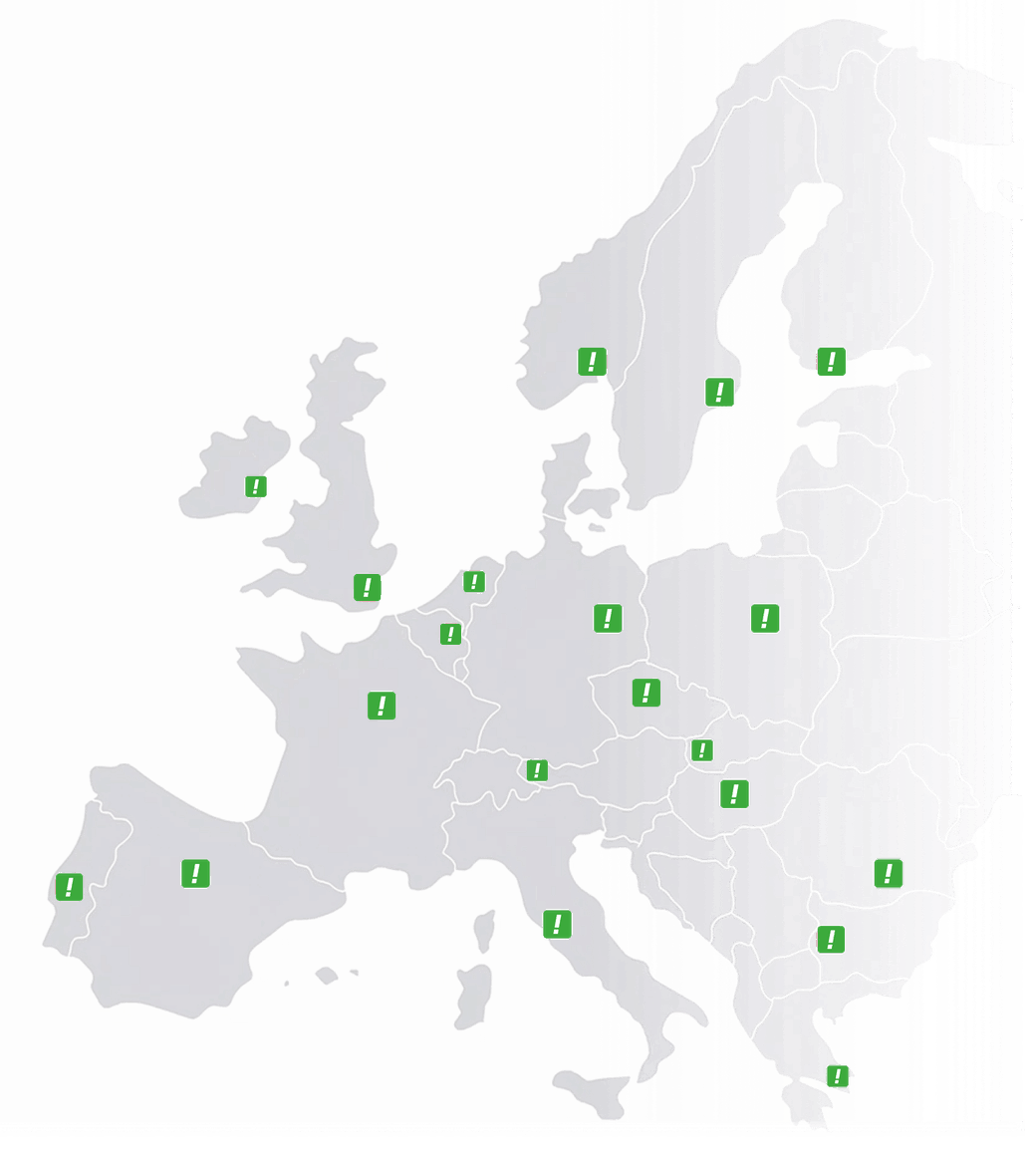
Austria
 Belgium
 France
 Germany
 Italy
 Netherlands
 Poland
 Spain
 Sweden
 United Kingdom
 United States

A French customer who finds a +353 number on your website or in a directory often hesitates before dialling it. Procurement teams, office managers and decision-makers in France weigh up who they ring, and a foreign prefix tells them before they pick up the phone that the supplier sits outside their country. That raises questions about call costs, response times, language and whether anyone is reachable during French hours, and for an Irish company that wants to win business in France it shows up as fewer enquiries by phone.
A French number removes that barrier at the moment a prospect decides whether to ring. A +33 number in the familiar French format means French customers call you in their own country, without an international call, and the call is answered by your team in Ireland. The number itself must be registered to a French establishment with a French address, a Kbis extract and a SIRET number, which the rest of this guide explains. The starting point is the French phone number page, where you choose a number and begin the registration.
Why a French number brings in more calls from France
The telephone number is one of the first things a buyer reads on your website. A +33 number tells them that reaching you costs nothing unusual and that you are present in the French market. The same number on your website, adverts, business directories, quotes and email signature gives them a contact that looks local, so they ring instead of looking elsewhere.
The effect builds as your presence in France grows. Every prospect, partner and supplier who finds you sees a French contact, so conversations start rather than stalling at the dialling stage. A French number does not replace good selling, but it removes an obstacle in front of every customer who wants to reach you, so your team spends more time on live calls.
What a French number is and how it works
A French number is an ordinary telephone number in the +33 numbering plan, assigned to you as the subscriber and pointed at whatever destination you choose. Geographic numbers carry a zone digit after the country code, so a Paris number starts with 01, while 09 numbers and the freephone numbers (0800 and 0805) are not tied to a region. The number lives on the network rather than on one device, so you can keep it for years and change where it rings as your setup changes.
When someone in France dials your number, the call is carried to the destination you have named: a mobile, a landline, a desk phone or a team in Dublin or Galway. Calls are carried over premium fixed and mobile networks, not over the internet and not along the cheapest route, so the sound quality holds up on the business calls where a dropped line costs you credibility.
What ARCEP requires to register a French number
France regulates its numbers through ARCEP, the national telecoms authority, which ties each +33 number to a traceable French subscriber. In practice a French local or 09 number is registered to a French establishment. You provide a French address, an extrait Kbis, which is the French company registration certificate, and a SIRET number that identifies the establishment.
This decides who a French number suits. An Irish company that is registered in France, or runs a French establishment, can supply those documents and then route calls to its team in Ireland, so the staff answering do not have to sit in France. An Irish company with no French registration does not qualify for these numbers. For the freephone numbers (0800 and 0805), we check with you first whether an address in France is needed. We check the address, Kbis extract and SIRET ourselves and issue the number once they are verified.
What a French number costs from Ireland
A French number with the full Customer Service functions costs €49 a month or €490 a year. It handles several calls at once and adds a call menu, a queue and opening hours, with up to eight people answering on the same number. To test the market first, the market test gives you one local or 09 number for €250 a year, prepaid, forwarded to one mobile or landline.
Calls to a foreign number are never part of normal use. They have their own per-minute rate, which depends on the number type and on where you forward the call, and we give it to you before you start. For a freephone line that matters most, because the receiving company pays for those calls.
Answering French calls from Ireland
France is one hour ahead of Ireland all year, so a customer who rings at 9:00 in Lyon reaches your office at 8:00. Calendar-based call routing decides what happens then: a colleague who starts early, a mobile, or a French message that gives your hours. With call forwarding each call goes to wherever your team works.
The text-to-speech assistant puts a French greeting in front of the line, and a call menu can offer French or English, so the caller reaches a French-speaking colleague straight away. If you want a record of conversations for training or to check what was agreed, call recording keeps them.
How to get a French number through CallFactory
CallFactory is a licensed telecoms operator in 14 European countries, France and Ireland among them, and runs its own intelligent IVR platform, so menus, routing and voicebots are set up and changed by the team that runs it. CallFactory has been in telephony since 2001.
Getting started takes three steps. Choose a number, deciding between a national French number (09, or freephone 0800 or 0805) and a geographic number such as a Paris 01 line. Send your French address, extrait Kbis and SIRET number. Then name where calls should ring and what French callers hear first. The number is usually live within one working day once we have verified your details. To begin, go to the French phone number page and select your number.