Austria
 Belgium
 France
 Germany
 Italy
 Netherlands
 Poland
 Spain
 Sweden
 United Kingdom
 United States

A buyer at an engineering firm in Stuttgart who finds a +353 number on an Irish supplier’s quote reads more into it than a dialling code. It tells them the call goes abroad, that it is billed on their international tariff, and that they may reach someone who does not speak German or who is not yet at their desk when the German working day starts. Many will send an email instead or ring the German competitor whose number looks like their own, so the enquiry your website, trade-fair stand or LinkedIn campaign earned never turns into a conversation.
A German phone number removes that friction, because the buyer dials a +49 line in the format they use every day and reaches your team in Ireland. For an Irish company the practical questions are which German number it is allowed to hold, what it costs in euro, and how an office in Limerick or Dublin answers German callers well. This guide covers all three, and you can compare the available numbers on the German phone number page.
Why Irish suppliers lose German enquiries to a +353 number
A buyer who is building a shortlist drops suppliers that look hard to reach, and a foreign number is an early signal of that, even when your product and price are right. Some company phone systems only allow international dialling for certain staff, so the person who found you may not be able to ring you at all.
A +49 number changes the starting point of the relationship. It sits on your website, in Google Ads, on quotes, in trade directories and in the email signature of your German account manager, and each of those places now invites a call rather than an email. The call still rings through to your team in Ireland, but the buyer deals with a supplier that has made the effort to be reachable on German terms.
Which German number an Irish company can hold
ComReg ties every Irish number to an Irish address and a CRO number, and the Bundesnetzagentur takes a similar line for numbers tied to a place. Under Ortsbindung, a location link, geographic numbers such as Berlin 030 or Munich 089, and the 032 national range, need a verifiable German address. That address can be a branch, a Handelsregister entry or a registered office in Germany, and a fulfilment partner’s warehouse counts if the partner cooperates.
For most Irish companies entering Germany this makes the 0800 freephone range the natural first number, because it is exempt from Ortsbindung and registers on your Irish company address. German callers ring it free of charge, which suits a sales or service line where you want no barrier at all to picking up the phone. A company that already has a German subsidiary, a warehouse or a registered office can take a city number that matches that location and still route every call to staff in Ireland.
What a German number costs from Ireland
A German number with the full Customer Service functions costs €49 a month or €490 a year. It includes freephone numbers abroad, handles several calls at once, adds a call menu, a queue and opening hours, and lets up to eight people answer on the same number. An Irish company without a German address takes this plan for an 0800 number.
A company that already has a German address can test the market first: one local or 032 number for €250 a year, prepaid, forwarded to one mobile or landline. Calls to a foreign number are never part of normal use. They have their own per-minute rate, which depends on the number type and on where you forward the call, and because an 0800 caller pays nothing, that cost sits with you. We give you the rate before you start, so you can budget before you publish the number.
Answering German callers from an Irish office
Germany runs on Central European Time, one hour ahead of Ireland all year, so a buyer who calls at 8:00 in Frankfurt reaches your office at 7:00. With calendar-based call routing you decide what happens in that hour: the call can go to a colleague who starts early, to a mobile, to voicemail or to a German message that gives your opening hours. The same schedule covers German public holidays that do not match Irish bank holidays.
The text-to-speech assistant greets callers in German, and a call menu can offer a choice between German and English, so a German-speaking caller reaches the right person straight away. You choose where each option lands: a German-speaking account manager in Cork, a sales agent working from home in Cologne, your own call centre or voicemail that is emailed to the team. Call forwarding delivers the call to the phones your team uses.
How CallFactory issues and routes the number
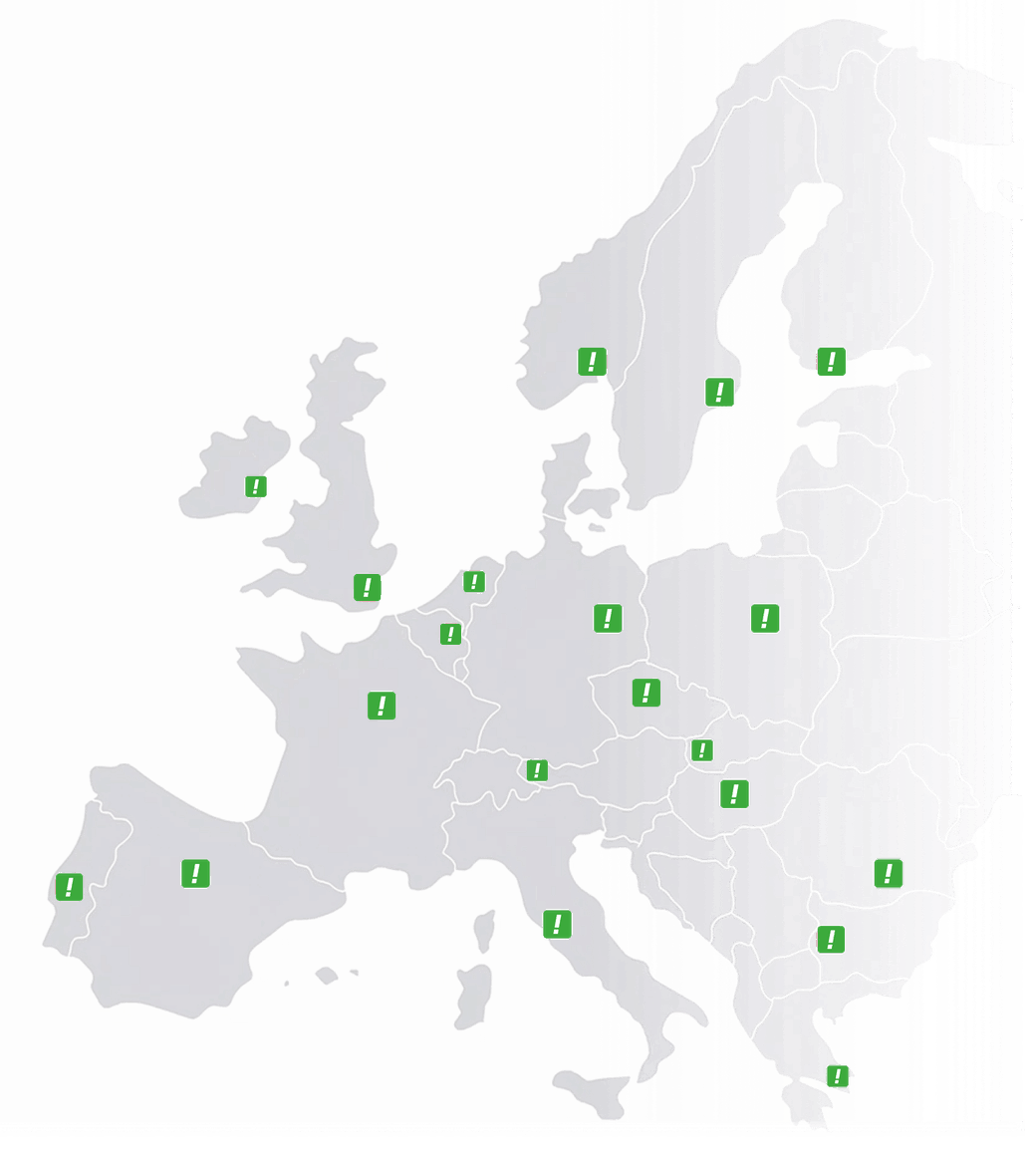
CallFactory is a licensed telecoms operator in 14 European countries, Germany and Ireland among them, and runs its own intelligent IVR platform, so menus, routing and voicebots are set up by the team that runs it. German numbers are our own: we are licensed with the Bundesnetzagentur and issue German numbers ourselves. For a geographic or 032 number we check the German address ourselves and issue the number once it is verified; for an 0800 number your Irish company details are enough.
Calls to the number are carried over premium fixed and mobile networks, not over the internet and not along the cheapest route, which keeps the audio clear on long technical calls about specifications, delivery dates or service contracts. CallFactory has been in telephony since 2001, and a German number is usually live within one working day.
Getting started from Ireland
Start by deciding which number fits where your company is established today. Without a German address that is an 0800 number on the Customer Service plan; with a German branch, registered office or fulfilment partner you can add a city number such as Berlin 030 or Munich 089, or a 032 national number. Then send your company details, and the German address where the number type needs it, and choose where calls should ring and what German callers hear first.
You can review the numbers and plans on the German phone number page and start the order there. If you want to record calls for training or to check what was agreed, call recording can be switched on for the same line.