Austria
 Belgium
 France
 Germany
 Italy
 Netherlands
 Poland
 Spain
 Sweden
 United Kingdom
 United States

Interactive Voice Response (IVR) is the technology behind the menu you hear when you ring an established business. The system answers the inbound call, plays a set of options, listens for a keypad press, and routes the caller to whichever team, queue or mailbox the business linked to that choice. Callers meet it many times a week without thinking about it, which is the point: when the routing works, nobody notices it happening.
For the business behind the number, more is at stake than the caller ever sees. The IVR decides whether a new enquiry reaches sales at the first attempt or moves between extensions until the caller gives up. This guide explains how the system handles a call, what Irish businesses route with it, what it costs and how to design a menu that helps callers instead of trapping them. On CallFactory the menu is our call menu (IVR), which we build for you on your business number.
How Interactive Voice Response works on a live call
Every call follows the same sequence. The number rings, the platform answers, and a recorded or text-to-speech greeting plays. The caller hears the menu, presses a key, and the routing engine matches that choice to a branch of the flow the business designed in advance. That branch might ring one phone, ring a whole group, place the caller in a queue, play your opening hours, or open a second menu for a large department.
The intelligence sits in the design rather than in the moment of the call. An IVR only handles the situations its flow anticipated, which is both its strength and its limit: known call types route straight away, while anything unexpected needs a path to a person. A closer look at the term itself is in our explainer on what IVR means.
The routing patterns Irish businesses use
The classic pattern is the department split, where sales, support and accounts each sit behind one digit of the call menu. That single layer removes most misdirected calls, because the caller chooses for themselves instead of a colleague guessing from a vague first sentence. A GP surgery might put appointments behind 1, repeat prescriptions behind 2 and the practice manager behind 3, while a solicitor’s office in Limerick separates conveyancing, family law and accounts.
Around that core, a handful of patterns cover most of what businesses ask for, and they combine freely because each one is another branch in the same flow. Time-based routing sends calls to different destinations inside and outside opening hours, so a caller at seven in the evening or on a bank holiday Monday hears an out-of-hours option rather than endless ringing. Overflow routing tries the first destination and moves on when nobody answers within a set time. A call queue holds callers and tells them their position during a rush, so the busiest hour of the day stops costing you callers.
What a well-designed menu sounds like
Callers hang up on menus that are long, vague or slow, so the skill is keeping it short. Three or four options work better than seven, because a caller can hold a short list in mind while a long one makes them listen to the whole menu twice. Each option should name the reason people call rather than the internal department name, since a customer knows they have a billing question long before they know which team handles billing.
The way out matters as much as the way in. Every branch should end somewhere useful within two levels, and there should always be a route to a person for the caller whose situation fits no option. Businesses that check their menu against their call history and drop the options nobody presses end up with flows that callers get through in seconds.
Where IVR stops and a voicebot begins
An IVR routes; it does not hold a conversation. When a caller wants opening hours, an appointment or an answer to a routine question, a menu can only send them to a person who then answers it, while a voicebot understands the spoken question and deals with it on the call. The two overlap less than people often assume, because one is built for known destinations and the other for varied conversations.
In practice many businesses use them together. The IVR stays in front as the router, and the voicebot takes one busy branch, covers the evening, or answers the calls that ask the same few questions. The voicebot costs €49 a month plus 35 cent per minute it talks, on top of Phone System at €25 a month. The full comparison is in our article on voicebot versus traditional IVR.
What makes an IVR dependable
The menu itself is only part of it. What matters is the network underneath. CallFactory delivers calls over the fixed and mobile network, so the audio stays clear and the connection holds through queues, transfers and long conversations. A flow that sounds good in a demo still loses callers if they meet lag and dropouts once real traffic arrives.
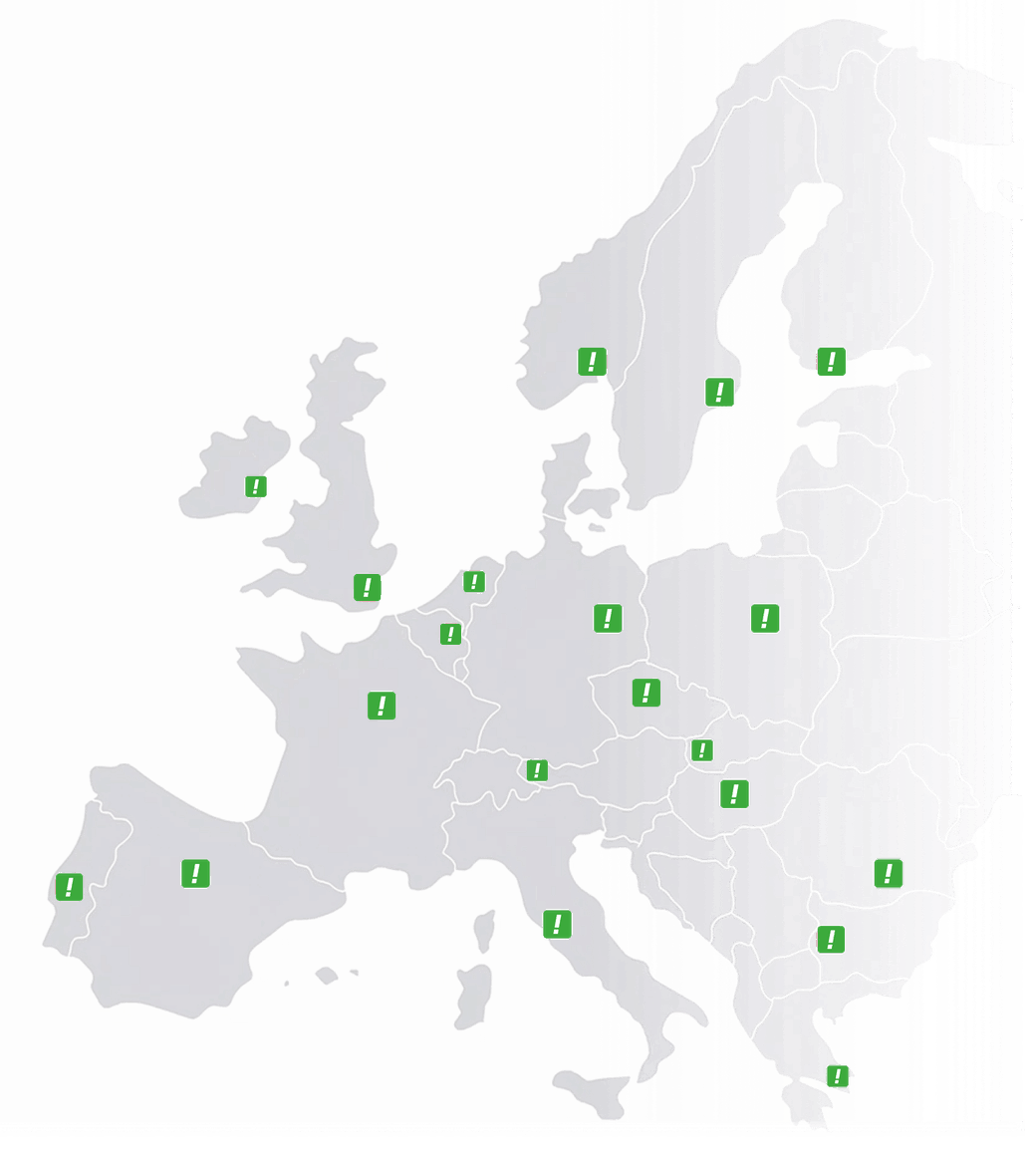
The second point is who carries the call. CallFactory is a licensed operator in 14 European countries, Ireland among them, and runs its own phone platform, so routing and support sit with the same team. We have run business telephony since 2001, and for businesses whose compliance rules require it, the same flows can run on a dedicated IVR server inside their own infrastructure as a custom project.
Setting up an IVR on your business number
Getting started is a conversation rather than a configuration project. We look at the calls you receive, agree what each option should do and build the flow for you, from a two-option menu on a single 01 number to a multi-level setup with a queue, opening hours, a bank holiday calendar and connections into your own systems. Once the flow is agreed, a menu change we make is live within one working day, and the destinations behind the keys you can change yourself in the dashboard, effective from the next call.
The result is an inbound line that answers every call the same way, moves each caller to the right destination at the first attempt, and keeps working under load. Your team spends its day on the calls that need a person, while greeting, sorting and queueing run automatically behind a number your customers already know.