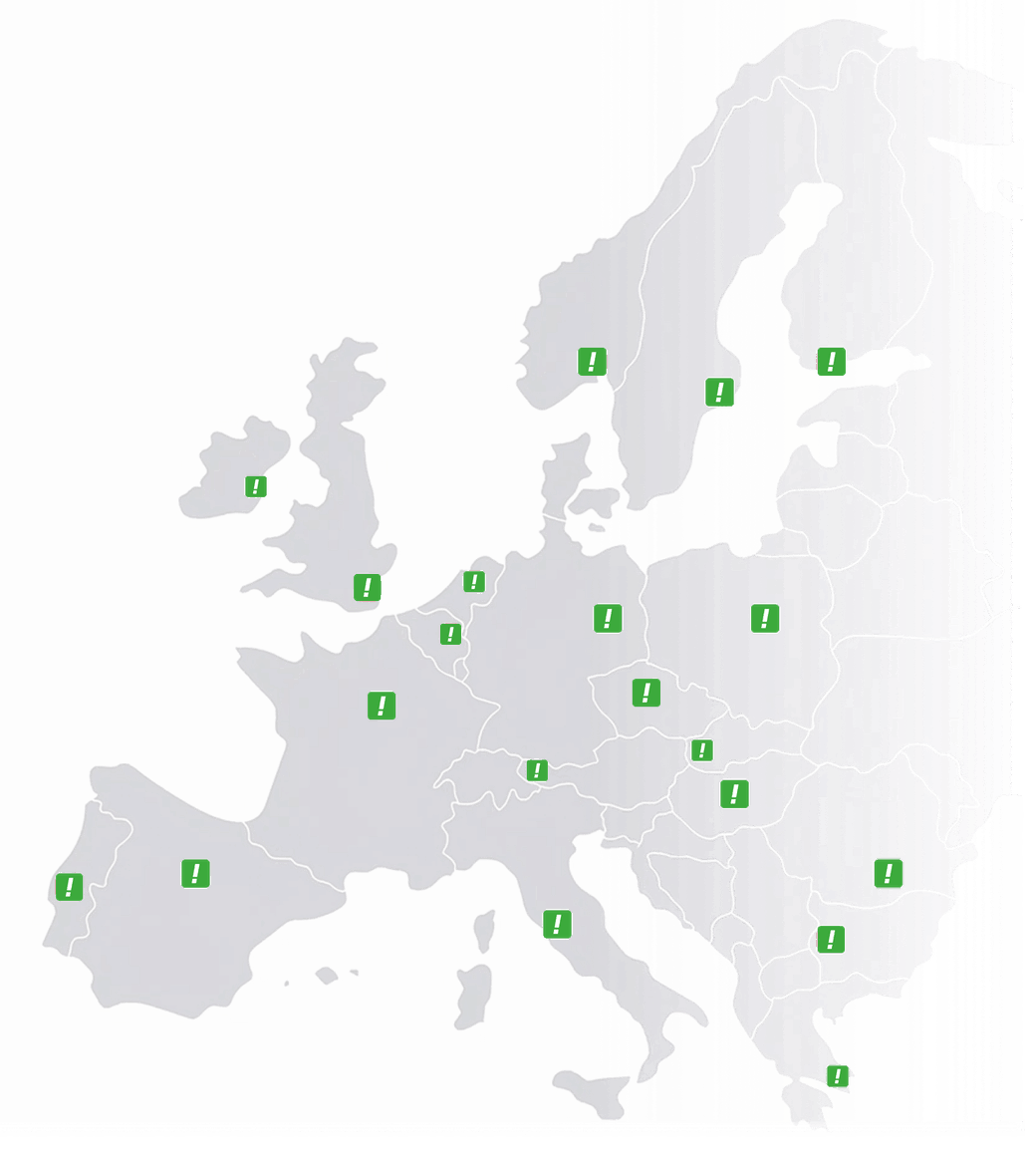
Austria
 Belgium
 France
 Germany
 Italy
 Netherlands
 Poland
 Spain
 Sweden
 United Kingdom
 United States

When a procurement manager in Madrid or a purchasing team in Valencia finds a +353 number on a supplier’s website, advert or quote, the usual reaction is to hesitate. A foreign prefix signals a company outside the country, an international call on their tariff and a contact that may not answer in Spanish. That single detail can stop an enquiry before the phone rings, because the buyer looks for a contact closer to home.
A Spanish number removes that barrier. Once your line is a +34 number in the format Spanish customers recognise, they call you in their own country without an international call, and the call rings through to your team in Ireland. You can choose such a line on the Spanish phone number page, and the rest of this guide explains which number fits, what Spanish rules ask of an Irish company and how CallFactory sets it up.
Why a Spanish number brings in more calls from Spain
The number a supplier publishes is one of the first things a buyer notices. A +34 line tells a Spanish company that you can be reached on Spanish terms, so the enquiries you generate arrive without the barrier of an international dialling format. Because the number looks domestic, the first call starts from familiarity rather than doubt.
A Spanish number on your website, adverts, directories, quotes and email signature turns interest into inbound calls, and partners who pass your details on do so with a contact that fits their own market. A 518 or 900 number gives you that Spanish presence without an office in Spain, while a provincial number is there for the day your business is established in a region.
Which Spanish numbers an Irish company can hold
Spain has three types of number that matter here. A geographic number carries a provincial area code, so a Madrid 91 number shows the capital and a Barcelona 93 number shows Catalonia. A 518 national number is not tied to a province and callers pay their normal rate. A 900 number is freephone, free for the caller.
Spanish numbers are regulated by the CNMC, the Comisión Nacional de los Mercados y la Competencia, and it draws a clear line. For a geographic 9xx number, the end user’s registered place of business must be in the province the area code covers. National numbers such as 518, and 900 freephone numbers, register on the customer’s own company address in any country, so an Irish company can hold one on its Irish address. That makes 518 or 900 the usual first number for an Irish exporter, and a provincial number the right choice once you have a branch or office in that province. Keep in mind that 900 and 518 numbers are not reliably reachable from outside Spain: they are lines for your Spanish customers.
What a Spanish number costs from Ireland
A Spanish number with the full Customer Service functions costs €49 a month or €490 a year. It includes freephone numbers abroad, handles several calls at once and adds a call menu, a queue and opening hours, with up to eight people answering on the same number.
To see whether Spanish demand is there before building a team around it, the market test gives you one local or 518 number for €250 a year, prepaid, forwarded to one mobile or landline. Calls to a foreign number are never part of normal use: they have their own per-minute rate, which depends on the number type and on where you forward the call. We give you that rate before you start, which matters most for a 900 line, because the receiving company pays for those calls.
Answering Spanish calls from an Irish office
Spain on the mainland is one hour ahead of Ireland, so a customer who rings at 9:00 in Madrid reaches your office at 8:00. Calendar-based call routing decides what happens in that hour and on Spanish public holidays: a colleague who starts early, a mobile, or a Spanish message that gives your hours.
The text-to-speech assistant greets callers in Spanish before the call connects, and a call menu can offer Spanish or English. With call forwarding each option rings the right colleague, whether that is one office in Cork, several locations or staff working from home. How a foreign number rings through to your team is explained on our international telephony page. If you want a record of what was discussed, call recording works on the same number.
How CallFactory checks and routes the number
CallFactory is a licensed telecoms operator in 14 European countries, Spain and Ireland among them, and runs its own intelligent IVR platform, so menus, routing and voicebots are set up and changed by the team that runs it. For a geographic number we check your place of business in the province ourselves and issue the number once it is verified; for a 518 or 900 number your Irish company details are enough.
Calls to the number are carried over premium fixed and mobile networks, not over the internet and not along the cheapest route, so the sound stays clear on the calls that matter. CallFactory has been in telephony since 2001, and a Spanish number is usually live within one working day.
Getting started from Ireland
Pick the number that matches your situation: a 518 or 900 number if you have no Spanish establishment, or a provincial Madrid, Barcelona or Valencia number if you are established in that province. Send your company details, plus the Spanish address for a geographic number, and choose where calls should ring and what Spanish callers hear first.
You can compare the options and start the order on the Spanish phone number page. Once the line is live, you can publish it on your Spanish website, email signatures and quotes.