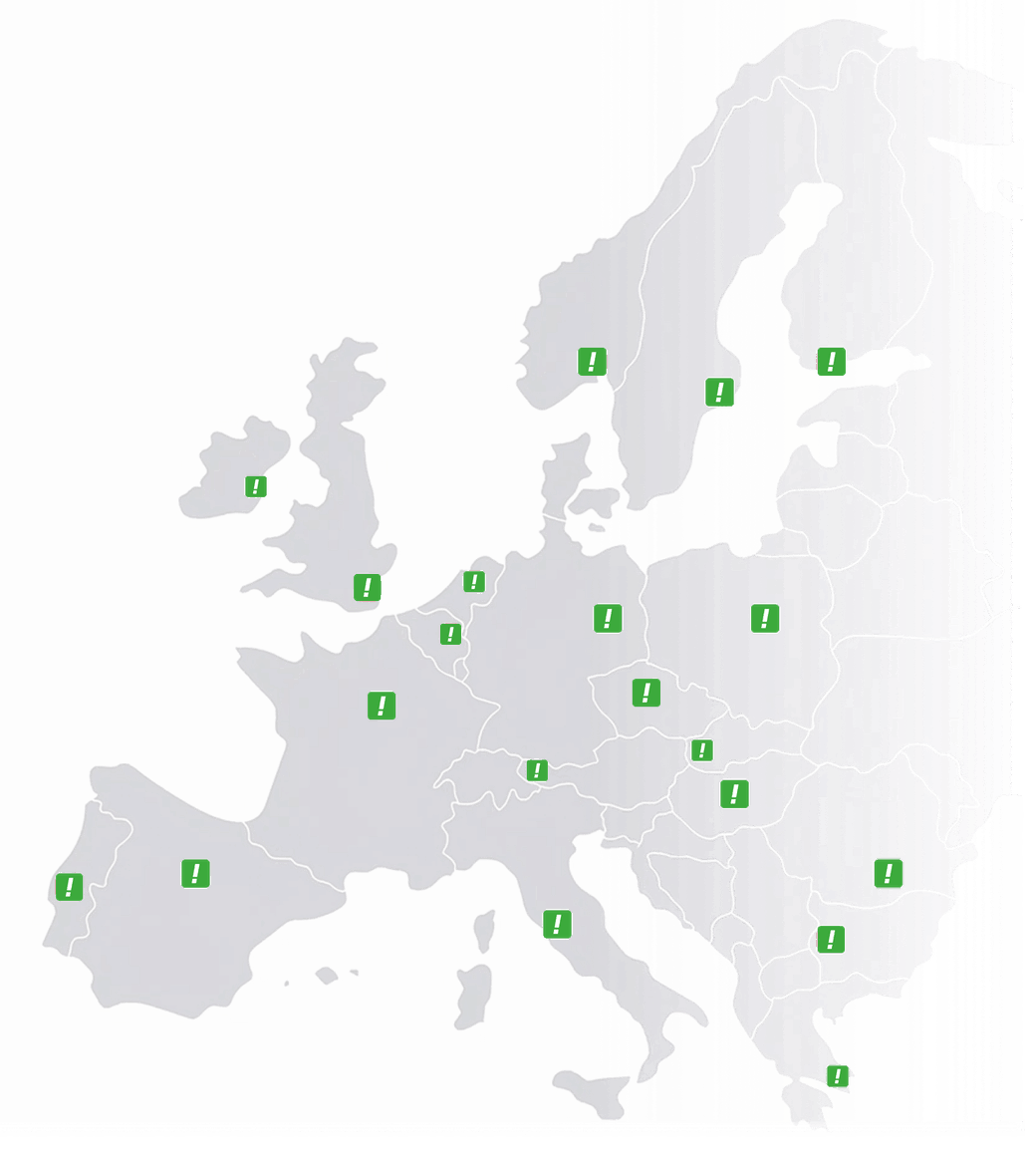
Austria
 Belgium
 France
 Germany
 Italy
 Netherlands
 Poland
 Spain
 Sweden
 United Kingdom
 United States

Every business with a phone number eventually reaches the point where someone rings and nobody is free to answer. An electrician is up a ladder in Galway, the receptionist at a GP surgery is dealing with the patient in front of them, a small agency in Dublin is between meetings. However it happens, an unanswered call rarely gets a second attempt: the caller either leaves without a message or rings the next business on the list. A telephone answering service exists to close that gap, picking up the phone in your company name whenever your own team cannot.
The term covers more ground than most business owners expect, from a traditional human answering bureau to an always-on AI receptionist built on a voicebot. This article sets out the models, what each one costs, the signs a business has outgrown informal call cover such as a shared mobile or an answering machine, and how to get started.
What a telephone answering service actually does
At its core, the service answers calls to your existing business number on your behalf, using a greeting and script built around your company rather than a generic one. Routine questions, such as opening hours, appointment availability or where an order stands, are answered directly. Anything that needs your judgement is either put through to the right person or recorded as a clear message, so nothing depends on whoever happens to be free at that moment.
The value shows most clearly outside normal working hours. Evenings, weekends, the bank holiday Monday and the half hour either side of lunch are when a shared office phone tends to go unanswered, and those are exactly the moments a caller tries another number instead. An answering service removes that gap without asking anyone to carry the phone home.
Types of telephone answering service: human or AI
The oldest model is a human answering bureau: a team of operators, working from a shared office, who answer on behalf of many client businesses at once and pass messages on by email. It suits businesses that specifically want a person on the line and can absorb the cost per call or per minute that comes with it.
The newer model is an AI answering service, a voicebot that answers straight away, understands what the caller needs and either deals with it or puts the call through, at any hour. At CallFactory this is our AI voicebot, which also runs as our AI virtual receptionist. It runs on our own platform and has no human operators behind it. Our article on the virtual receptionist compares the human and AI models in more detail, and the AI receptionist article covers what the AI does day to day. Many businesses land on a mix: their own team handles core hours, and the voicebot covers the rest.
How much a telephone answering service costs
A human answering bureau usually bills by the call or by the minute, so the cost rises as call volume climbs, and cover outside office hours often costs extra on top of the base rate.
An AI answering service works differently. At CallFactory it is our AI voicebot: €49 a month plus 35 cent per minute it talks, billed per second, on top of the Phone System plan (€25 a month). There is no setup fee, prices exclude VAT, and evenings, weekends and bank holidays cost the same as a Tuesday morning. Integrations with your diary or customer system are quoted separately. Compared with employing a full-time receptionist, who also needs cover for holidays and sick days, an answering service gives you cover that one employee cannot provide across a full week.
The comparison that tends to persuade business owners is not the monthly invoice but the enquiries that would otherwise disappear. Many callers who reach voicemail hang up rather than leave a message, which means the advertising that brought in the call is wasted the moment it goes unanswered. Measured against those lost enquiries rather than against doing nothing, the monthly cost is usually recovered from a handful of calls that would otherwise have gone elsewhere.
Signs your business has outgrown ad hoc call cover
A shared mobile or a colleague picking up “when they can” works while call volumes are low. The signs it has stopped working are specific: calls going to voicemail during business hours, customers mentioning they rang twice before getting through, or a team member’s actual job being interrupted several times a day to answer the general line. Seasonal peaks, a new advertising campaign or opening a second premises are common triggers that push call volume past what informal cover can absorb.
There is also a quieter version of the same problem, where calls do get answered but inconsistently, because whoever picks up gives a different answer to the same question depending on how busy they are. A dedicated answering service makes that experience consistent, since the script and the information behind it stay the same on every call, whether it is the first of the day or the fortieth.
Call quality and our own platform
Two things keep a telephone answering service reliable. The first is call quality. CallFactory delivers calls over the fixed and mobile network, so the line stays clear enough for accurate answering, which matters most when a voicebot is following a conversation.
The second is who operates the service. CallFactory is a licensed telecoms operator in 14 European countries, registered with ComReg in Ireland under number ERAU10001358, and runs its own platform, with business telephony experience since 2001 behind it. That matters if a fault ever needs tracing quickly, because the team that answers your question also runs the platform. Every voicebot has a fallback route, so a caller the bot cannot help reaches a person or voicemail.
Getting started with a telephone answering service
Setup does not require a new phone number. Your existing number, whether a local 01 or 021 number, an 0818 number or a 1800 Freephone number, is forwarded to the service, either for every call or only when your team does not pick up within a set number of rings, so the switch is invisible to customers. If you do not have a business number yet, you can choose one on our Irish phone numbers page. The greeting, opening hours and message rules are agreed up front, usually based on the handful of questions your business is asked most often on the phone, and a test call confirms everything works before it goes live.
From there, the AI voicebot is usually answering calls within two working days, and the rules stay easy to change as the business changes. Opening hours and routing you adjust yourself in the dashboard, for example before a bank holiday, and for new information such as a new service or price you send the details to our support team, who update the voicebot. The number on your website keeps bringing in enquiries; the difference is that every one of them now gets answered.